
A Century of
Spiritual Leadership

For two centuries, B’nai Jeshurun has been shaped by rabbis and hazzanim (cantors) whose leadership spanned decades, guiding the congregation through changing religious landscapes while insisting that Judaism remain intellectually serious, ethically demanding, and deeply engaged with the world. Their leadership reflects a distinctive vision of the synagogue—not only as a place of prayer, but as a center for learning, moral courage, and communal imagination.
Israel Goldstein
BJ Rabbi 1918-1960
Rabbi Israel Goldstein guided B’nai Jeshurun through a transformative period in American Jewish life, strengthening the congregation while emerging as a major national voice. Seeking to balance a commitment to Jewish tradition with the demands of a rapidly modernizing America, Goldstein officially affiliated the synagogue with the Conservative movement. During the 1930s and 1940s he used his pulpit and public voice to call attention to the mounting crisis in Europe. He urged the U.S. government to admit political and religious refugees fleeing Nazi persecution and helped mobilize community support via national Jewish relief organizations. Through steady leadership across decades of change, Goldstein positioned BJ as a congregation of learning, service, and global Jewish responsibility.
During his time at BJ, Rabbi Goldstein was head of the New York Board of Rabbis (1928–30), the Jewish National Fund of America (1934-1943), the Zionist Organization of America (1943-1946), and American Jewish Congress (1952-1959), and helped found the National Conference of Christians and Jews.

The Jewish Congregation is a valid and valuable gauge for the development of Jewish life in the United States. Congregation B’nai Jeshurun is an unusually good specimen for study and observation.”
— Rabbi Israel Goldstein,
The Jewish Congregation is a valid and valuable gauge for the development of Jewish life in the United States. Congregation B’nai Jeshurun is an unusually good specimen for study and observation.”
— Rabbi Israel Goldstein,

Jacob Schwartz
BJ Cantor 1914-1953
Cantor Jacob Schwartz served as cantor of B’nai Jeshurun beginning in 1914, during a period when the congregation was navigating the transition from its German-Jewish roots to a growing, more diverse community. As hazzan, Schwartz shaped the musical and spiritual life of BJ through traditional nusah and original liturgical compositions that reflected both continuity and change in American Jewish prayer.
A melody attributed to Schwartz was rediscovered more than a century later and incorporated into B’nai Jeshurun’s bicentennial celebrations—testament to the lasting imprint of his musical leadership. His work stands as an early chapter in BJ’s long tradition of innovative, spiritually vibrant prayer grounded in classical cantorial art.
Link to Music???

William Berkowitz
BJ Rabbi 1951-1984
Rabbi William Berkowitz expanded BJ’s presence beyond its sanctuary walls. Through the renowned Dialogue Forum, he invited global leaders, scholars, artists, and activists—including U.S. presidents, Nobel laureates, and prominent thinkers—into public conversation, ensuring that BJ played a visible and influential role in the civic and moral debates of the era. He was a pioneer in adult Jewish education, establishing lecture series, study groups, and enormously popular community learning programs. Berkowitz also promoted interfaith dialogue, partnering with Christian, Muslim, and other religious leaders to foster understanding and cooperation. Unfortunately, urban flight and changing religious patterns emptied pews, but a handful of determined members maintained prayer and social life. Berkowitz’s work emphasized that a synagogue’s mission extended beyond ritual worship to engaged, informed citizenship and moral leadership.
Ours is an institution founded on broad dimensions, not limited in horizons nor parochial in outlook. At the very inception of our Congregation we recognized the true historic mission of the synagogue; namely, that its mission is not only to worship God with our minds and hearts but also to afford us a better understanding of the world, to give us the proper perspective of the past and a clearer understanding of the future.
— Rabbi William Berkowitz

We do not talk about building a congregation at B’nai Jeshurun;
rather our work is building community.
— Rabbi Marshall T. Meyer
Marshall T. Meyer
BJ Rabbi, 1985-1993
A student of Rabbi Abraham Joshua Heschel and a human-rights activist in Argentina, Rabbi Marshall T. Meyer revitalized B’nai Jeshurun upon his arrival. His passionate spirituality, moral courage, and tireless fight for social justice transformed BJ into a beacon of progressive Judaism. Meyer was instrumental in advancing civil rights, interfaith dialogue, and refugee support, bringing the congregation into direct engagement with pressing social issues. He expanded BJ’s educational programs, nurturing adult learning, youth initiatives, and community study groups. Under his leadership, the synagogue became musically and liturgically innovative, resulting in vibrant prayer experiences. Meyer’s tenure laid the foundations of BJ’s contemporary identity: inclusive, activist, musically rich, intellectually stimulating, and relentlessly compassionate.

Roly Matalon
BJ Rabbi 1986-Present
Rabbi Roly Matalon has been one of the principal architects of BJ’s modern identity, reshaping the congregation through a blend of spiritual intentionality, musical depth, and communal openness. Arriving in the mid-1980s from Argentina, he helped lead a liturgical transformation that centered heartfelt prayer and music, global Jewish melodies, and a participatory prayer culture that is now a hallmark of BJ. Deeply grounded in Jewish text and tradition, Rabbi Matalon has cultivated a community where prayer is alive, learning is shared, and every person is invited to bring their whole self into the life of the community.
Rabbi Matalon’s leadership has also been defined by moral courage and pastoral presence in moments of profound communal need. BJ’s response to the HIV/AIDS crisis—including creating sanctuary, care, and belonging at a time when many were turned away—became one of the congregation’s defining expressions of Judaism lived with dignity and responsibility. His commitment to social justice, Israel engagement, and interfaith partnership expanded BJ’s moral voice in New York City and beyond. Rabbi Matalon is a founding co-director of Piyut North America (now Global Piyut Music), a partnership dedicated to sharing liturgical music from Jewish communities around the world; a student of Arabic and Turkish music, he also plays the oud. His contributions have been recognized with awards from the New York Board of Rabbis, the Jewish Peace Fellowship, the New Israel Fund, and T’ruah: The Rabbinic Call for Human Rights.
Our community is made of ordinary people who are striving to create holiness together. People are thirsty to be together and yearning to be engaged in meaningful, relevant, and authentic experiences of Jewish identity and Jewish history.
— Rabbi Roly Matalon

Ari Priven
BJ Hazzan, 1989-Present
Hazzan Ari Priven has been a force in shaping B’nai Jeshurun’s musical and spiritual life since joining the community in 1989. He helped develop BJ’s emotionally engaged, participatory approach to prayer—an influential model for synagogues across North America and beyond.
Born in Argentina and trained by Rabbi Marshall T. Meyer, Hazzan Priven brings both spiritual depth and artistic vision to his work. He has produced and performed on several recordings of BJ’s music, including With Every Breath: The Music of Shabbat, HaLailah Hazeh: The Music of Pesah at BJ, and TekiYah: Echoes of the High Holy Days at BJ.
Link to Music???
Music is a platform that allows us to connect with one another in a visceral way. I can remember moments where I feel like music was the only way that we can actually do certain things. When everybody is singing – that beauty of everybody singing together – you cannot express it in words.
— Hazzan Ari Priven

Marcelo Bronstein
BJ Rabbi 1995-2017
A visionary spiritual leader shaped by his Argentine roots and a deep commitment to global Jewish life, Rabbi Marcelo Bronstein helped guide BJ through a period of expansive growth and profound renewal. During his two decades of leadership, he infused the community with warmth, contemplative practice, and a passion for ethical responsibility. He strengthened BJ’s international partnerships, elevated its pastoral and educational life, and championed a Judaism grounded in spiritual openness and human dignity. His gentle presence, soulful teaching, and unwavering belief in every person’s capacity for transformation continue to resonate in the fabric of BJ’s communal life.
BJ is a hub of creativity, a laboratory of Jewish possibility where ideas like this can be nurtured. It’s my spiritual home.
— Rabbi Marcelo Bronstein
Felicia Sol
BJ Rabbi, 2001-Present
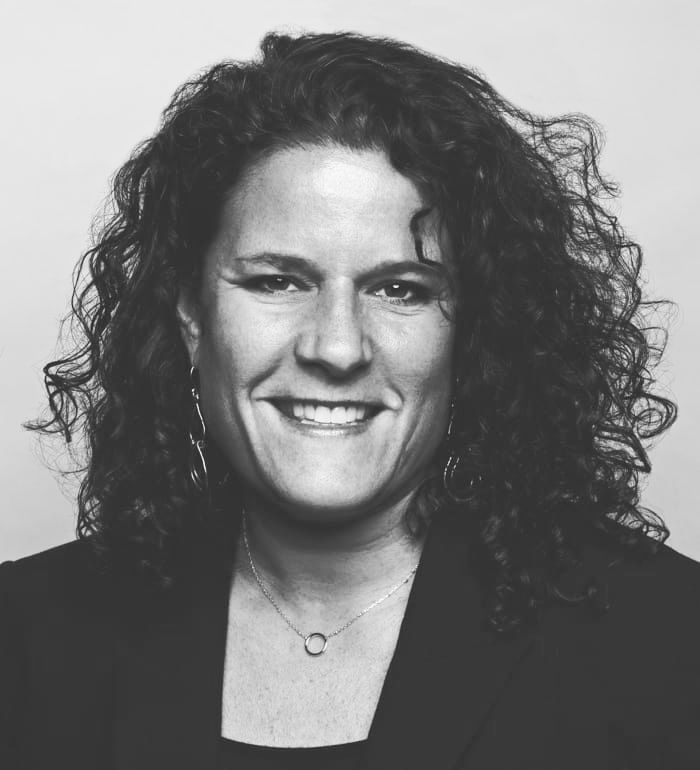
Rabbi Felicia Sol has helped shape BJ for nearly three decades through steady leadership, spiritual depth, and an expansive vision of what a synagogue can be. The first woman to serve as rabbi—and later as senior rabbi, and Rosh Kehillah beginning in July 2026—in BJ’s history, she has been central to the congregation’s transformation into a community known for passionate prayer, serious learning, and moral engagement. Across her years at BJ, Rabbi Sol has strengthened the pathways through which people of different ages and backgrounds enter Jewish life, helping BJ become a place where belonging is cultivated with intention and where tradition is lived with both rigor and openness. She has led and shaped BJ’s programmatic vision across the full arc of communal life, from families and youth through adult learning and community-building. She has also been a leading voice in BJ’s efforts to embrace the evolving realities of Jewish identity and family life, helping the community respond with compassion, clarity, and openness.
Rabbi Sol has guided generations of members through moments of joy and grief, growth and transition. She has mentored and formed emerging rabbinic leaders, shaping the next generation of Jewish leadership far beyond BJ. Her rabbinate is marked by deep care for community, practical wisdom, and a commitment to building a more just, inclusive, and spiritually alive Jewish future—within BJ and across the wider Jewish world.
At BJ's essence, there's this intensity and spiritual search. A feeling that Jewish life can encapsulate all the complexity of living and that the tradition has something to power us through. That it is deeply spiritual, demanding and also very rich.
— Rabbi Felicia Sol

Rebecca Weintraub
BJ Rabbi 2020-Present
Rabbi Rebecca Weintraub represents BJ’s next chapter of rabbinic leadership—rooted in tradition, shaped by deep pastoral care, and oriented toward the future of the Jewish community. Ordained by the Hebrew College Rabbinical School in June 2020, she joined B’nai Jeshurun as assistant rabbi in July 2020, became associate rabbi in July 2024, and on January 1, 2026 was promoted to Rabbi in recognition of her tremendous contributions to BJ families and to the community as a whole.
At BJ, Rabbi Weintraub has become a central presence in the community’s bustling family life, helping shape the rhythms through which children, parents, and multigenerational households experience Jewish tradition as joyful, meaningful, and lived. Her rabbinate reflects BJ’s ongoing commitment to learning, belonging, and community care.
There’s a sense here of knowing who we are and what it means to belong. There’s an authenticity and a realness, a vulnerability and openness that runs through everything we do. BJ is a place of seekers, and we’re not meant to do that journey alone.
— Rabbi Rebecca Weintraub


